
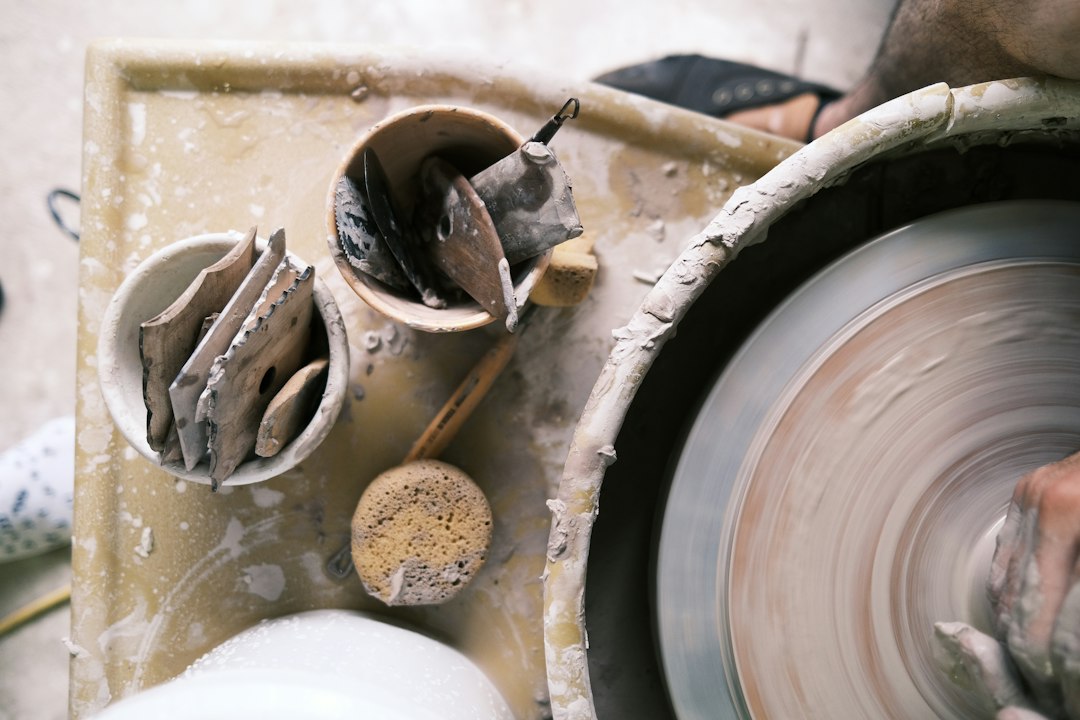
Photo by Taylor Heery on Unsplash
Your first pottery class starts in an hour and you’re staring at your closet deciding between jeans and sweatpants. Neither is right. Clay finds every seam, every cuff, every hem you own, and it doesn’t wash out easily from anything you actually care about.
This pottery class beginner guide covers what to bring, what to expect, and how to get better faster once you’re at the wheel. None of it is complicated. Most of it just doesn’t occur to you until you’ve already made the mistake once.
What to wear and bring
Wear clothes you don’t mind staining. Clay splatter is inevitable, especially in your first few weeks when centering isn’t automatic yet. Closed-toe shoes matter too. Studios have wet floors, kiln equipment, and dropped tools, and open sandals are the wrong choice for all three. Bring a towel for your hands and lap.
Most studios supply clay, tools, and aprons, but don’t assume. Confirm with your leader before the first session, especially if you’re joining a workshop series where materials get listed in advance logistics. A five-minute message beforehand saves you from showing up with nothing and improvising with paper towels.
Arrive early to settle in
Show up 10 to 15 minutes before your session starts. That window gives you time to stash your bag, find the bathroom, and introduce yourself to your leader before instruction begins. Walking in at the exact start time means you’re fumbling with a locker while everyone else is already listening to the day’s technique breakdown.
Early arrival also matters for equipment. Wheels aren’t always assigned randomly, and the first few people in the room often get first pick of the better-maintained stations. Small thing, but it adds up over a six-week series.
Don’t expect perfect results
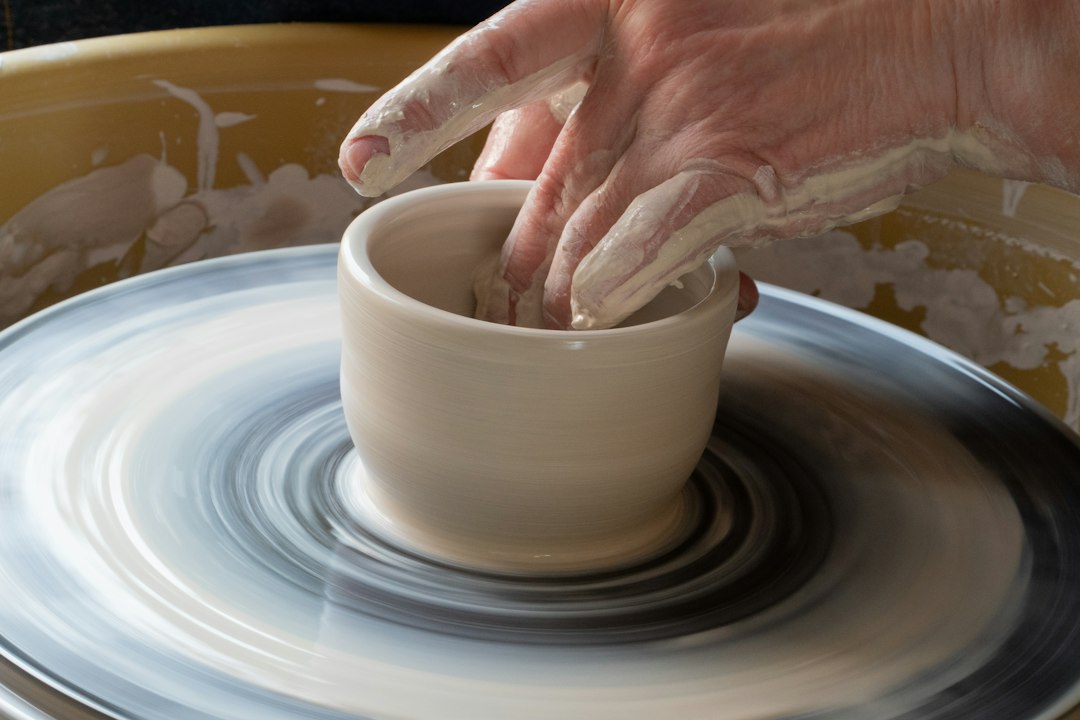
Your first pot won’t be symmetrical. Your second one probably won’t be either. Potters spend months just getting basic centering right, the step where you get the clay spinning true on the wheel before you even start shaping anything. Professionals who’ve thrown thousands of pieces still get off-center bowls when they’re tired or rushing.
The point of a beginner class isn’t gallery-ready output. It’s technique. A lopsided mug that taught you how much pressure to apply with your left hand is worth more than a symmetrical one you got lucky on. Reframe your first session around what you learned, not what you made.
Focus on one technique per session
Centering, throwing, trimming, and glazing each demand different muscle memory. Trying to nail all four in one two-hour session usually means you leave with shaky command of none of them.
Pick one skill to focus on. If centering is still inconsistent, spend the whole session on that, even if it means your bowl never gets past the cylinder stage. Instructors expect this. A student who masters centering in week two moves through the rest of the curriculum faster than one who rushed ahead and never fixed the foundation.
Take notes on what works
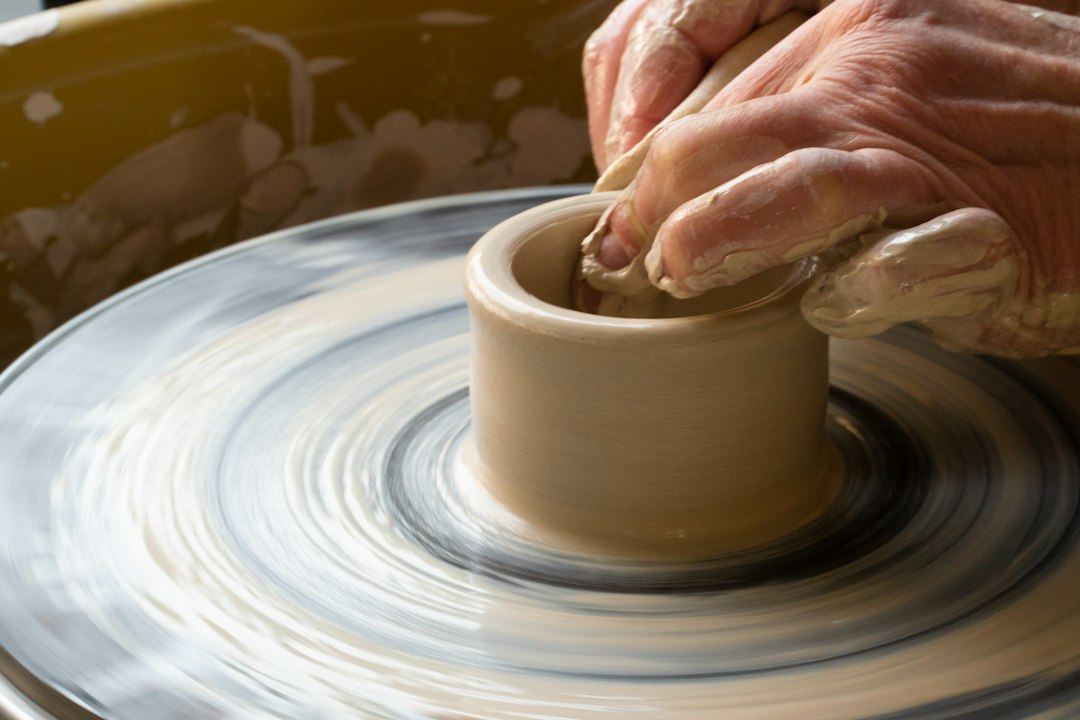
When something clicks, write down why. How much water you added to the clay, where your hands sat on the piece, how much pressure you used to pull the walls up. These details fade fast once you’re back home and the clay is gone.
A notebook with three or four lines per session is enough. "Used more water than usual, kept elbows locked against my knees, walls came up even." That sentence, read before your next class, saves you twenty minutes of re-discovering the same fix.
Ask your leader for feedback between sessions
Most pottery workshops build in a messaging window between classes specifically for this. Send a photo of your piece and ask what to adjust. Did the rim thin out unevenly? Was the base too thick? A leader can spot in a photo what took you an hour to feel with your hands.
Organizers running multi-week pottery series through a platform like Wayfield often set up this messaging window as a standard part of the workshop, precisely because momentum between sessions matters as much as the sessions themselves. Use it. A single photo and a two-line question keeps you improving even during the week you’re not in the studio.
Plan to attend consistently
Pottery builds on itself. Skip week three of a six-week series and you’re relearning centering in week four instead of moving on to trimming. Attendance gaps don’t just slow you down, they reset progress you already made.
Consistent attendance over four to six weeks beats sporadic attendance stretched across three months. If your schedule is tight, pick a shorter series you can actually finish rather than a longer one you’ll attend half of. A completed beginner series, even a compressed one, gets you further than a drawn-out commitment you keep missing.
Find workshops near you at wayfield.app/workshops
Recommended Resources
pottery aprons
Article recommends studios supply aprons but advises confirming in advance; a personal apron ensures protection on day one.
hand towels
Article explicitly lists towel as essential beginner pottery class item.
work shoes
Article emphasizes closed-toe footwear as safety requirement for wet floors and studio hazards.
As an Amazon Associate, Wayfield earns from qualifying purchases. Clicking and buying through these links supports this content at no extra cost to you.




Leave a Reply