
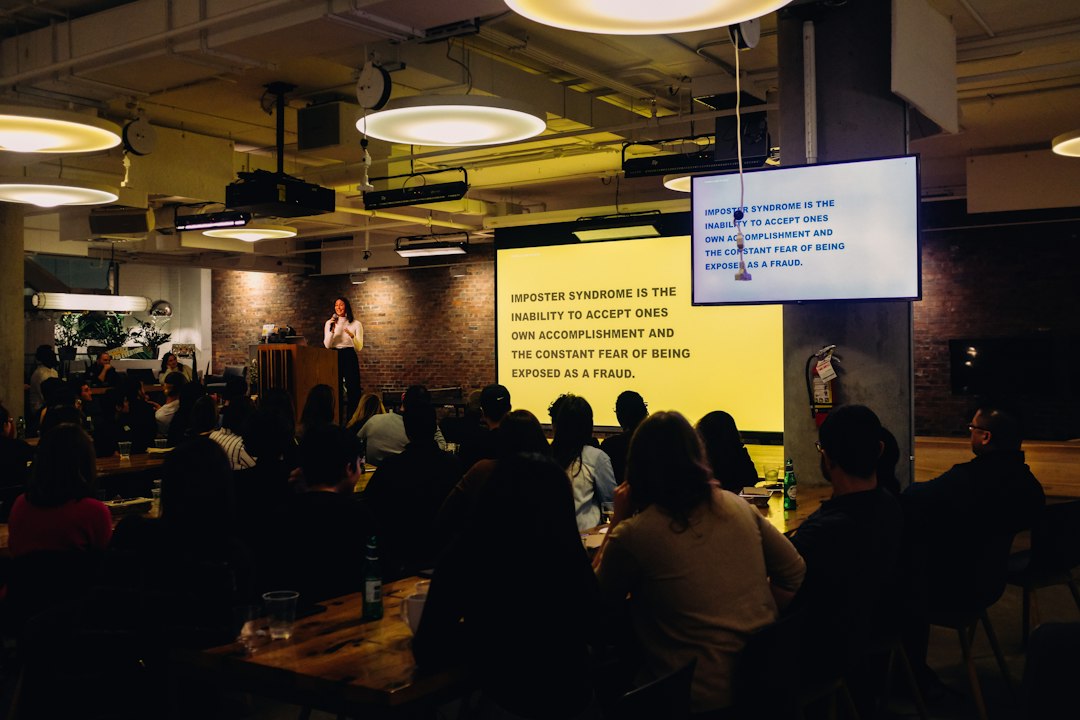
Photo by Maya Maceka on Unsplash
Two hundred people register for your free webinar. One hundred forty show up. You spend an hour teaching your best material, answer questions, send a follow-up email with a link to your paid workshop. Three people register.
That’s not a fluke. That’s what happens when a webinar is built as a generic awareness play instead of a filtering mechanism. High attendance, low conversion, and an organizer left wondering why a room full of engaged faces didn’t turn into paid registrations. The problem isn’t your content. It’s that nothing in your webinar structure separates a curious browser from someone ready to pay for a two-day intensive.
Why free webinars fail to convert (and what actually works)
Most webinars are built to maximize attendance. More sign-ups feels like success, so organizers chase reach: bigger email lists, wider promotion, lower barriers to entry. But a webinar built for volume attracts volume-shaped intent. People show up because it’s free and costs nothing to click a link. They never had to commit to anything, so they have no reason to convert to a paid workshop.
Webinar to workshop conversion works differently. It starts by narrowing the top of the funnel on purpose. You’re not trying to get 500 sign-ups. You’re trying to get 40 people who behave like buyers.
Structure your webinar as a selection mechanism, not a pitch
Drop the sales-page format. Run the webinar as session one of your workshop series. Teach the same way you’d teach in the paid room: real technique, real feedback, no held-back "save it for the paid version" material.
Participants who show up, stay engaged, and complete the session are showing you exactly who they are. They already decided you’re credible by attending. The format does the qualifying work a sales pitch never could. A ceramics instructor running a free glazing demo will see this immediately: the people who stay for the full 90 minutes and ask about kiln temperatures are not the same people who drop off after ten minutes to check email.
Pricing and commitment signals in the webinar funnel

Charge $15 to $25 for webinar entry if you’re serious about qualified attendance. Free events attract no-shows at rates north of 40%. A small fee changes the calculation for the registrant: they’ve spent money to be there, so they show up, and showing up is the entire game.
At sign-up, offer a discount code for the paid workshop, valid for 48 hours after the webinar ends. This gives attendees a reason to act while the material is fresh, and it creates a visible deadline that separates "interested" from "registered."
Timing your conversion window (and why it matters)
Send the workshop registration link during the webinar, not in a follow-up email three days later. Attendees are mentally present, engaged, and primed by whatever you just taught them. That’s the moment intent is highest.
A second wave arrives with a follow-up email 24 hours later; catch that group, but don’t expect much beyond it. After day two, conversion drops 60 to 70% for paid workshop registration. If your registration link isn’t live and visible inside the webinar itself, you’re leaving the highest-intent moment of the funnel unused.
Track attendance and engagement as leading indicators

Not all attendees are equal, and treating them equally in your follow-up wastes effort. Webinar attendees who stay past the midpoint and ask a question convert at roughly 3x the rate of people who watch passively and log off.
Note those names during the session. Their follow-up sequence should skip the pitch entirely and move straight to logistics: session selection, commitment dates, what to bring. They’ve already decided. Your job is removing friction between decision and registration, not re-selling them.
Wayfield logs attendance and lets you flag engaged participants directly in the roster, so your follow-up list builds itself instead of living in a spreadsheet you update by hand at midnight.
Build recurring webinars into your workshop calendar
Run the same webinar monthly. Each run fills a different workshop cohort, and the content doesn’t need to change much between iterations; the audience does. A photography educator running a monthly "portrait lighting basics" webinar isn’t reinventing the session every 30 days. She’s running the same 60-minute teach, filling 8 new spots each time.
One piece of content becomes a lead generation system that runs independent of paid ads or external promotion. You’re not chasing new traffic sources every month. You’re re-running a mechanism that already works.
Setting workshop capacity based on webinar conversion math
Work the numbers backward. If 40 people attend your webinar and 20% convert, that’s 8 paid registrations. Set your workshop capacity at 8, not 20. Overshooting capacity based on hope instead of conversion data leaves you with half-empty cohorts and per-participant costs that don’t pencil out.
At that rate, one webinar of 40 attendees fills 2 to 3 cohorts before you need to run it again. A writing workshop leader charging $180 for a weekend intensive, working from an 8-person cap and a reliable 20% conversion rate, can plan three months of paid sessions off a single recurring webinar without touching a new marketing channel.
The math only holds if your registration flow is clean. A discount code that expires at the wrong time, a commitment date that’s unclear, a roster that doesn’t sync with your session capacity, any of these breaks the conversion number you’re counting on. Wayfield handles the registration flow, commitment dates, and capacity limits in one place, so the funnel you built doesn’t leak at the handoff between webinar and paid workshop.
Start your first workshop free at wayfield.app/getting-started, no credit card required.





Leave a Reply