
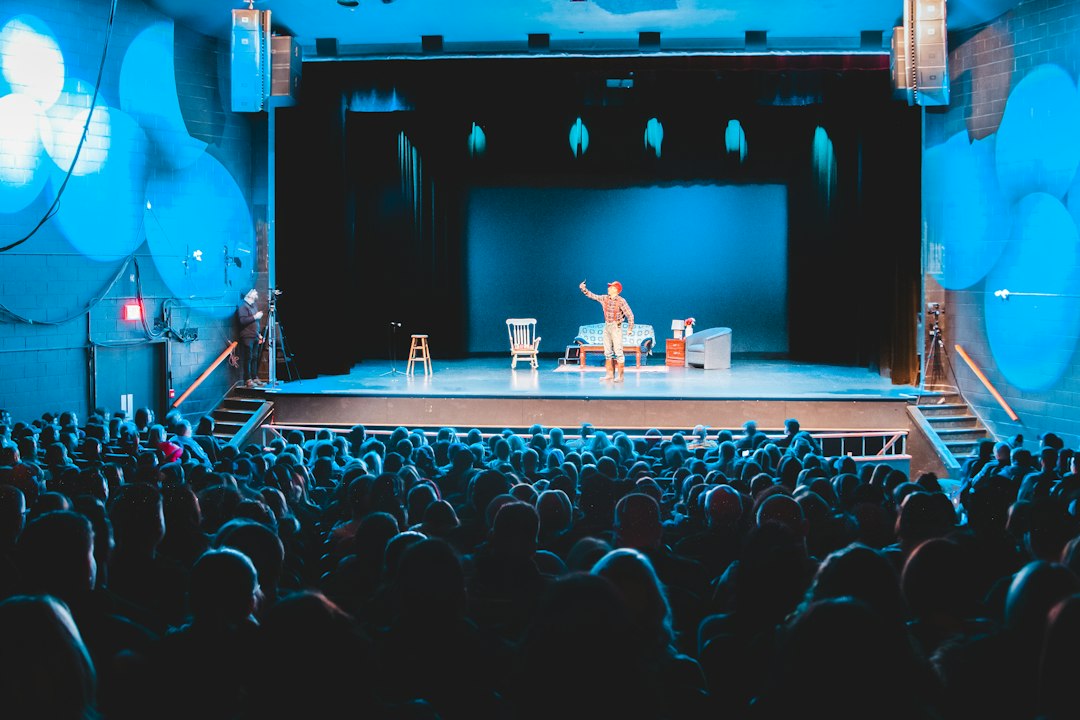
Photo by Erik Mclean on Unsplash
The first time you say a line out loud in front of strangers, your hands will shake a little. Picture it: 7 p.m. on a Tuesday, a rented studio with buzzing fluorescent light, eleven people you met twenty minutes ago watching you. That’s not a sign you’re doing it wrong. It’s the body registering risk where there isn’t any. Most adults who want to try acting get stuck right here, at the gap between wanting to do it and actually standing up to do it. The beginner acting first steps that matter most aren’t about technique. They’re about building a foundation that makes the shaking stop mattering.
Start with your own voice, not an imitation
Before you try to sound like anyone else, you need to know how you already sound. Record yourself reading a paragraph out loud. Any paragraph: a news article, a page from a novel, the back of a cereal box. Play it back.
Listen for your rhythm. Where do you pause? Which words do you naturally stress? Most beginners skip this step entirely and jump straight to imitating an actor they admire, which means they’re copying a performance built on someone else’s instincts. That’s backward. Your voice, the one on that recording, is your baseline. Everything you build later gets built on top of it, not instead of it.
Learn to sit with discomfort in a room full of people
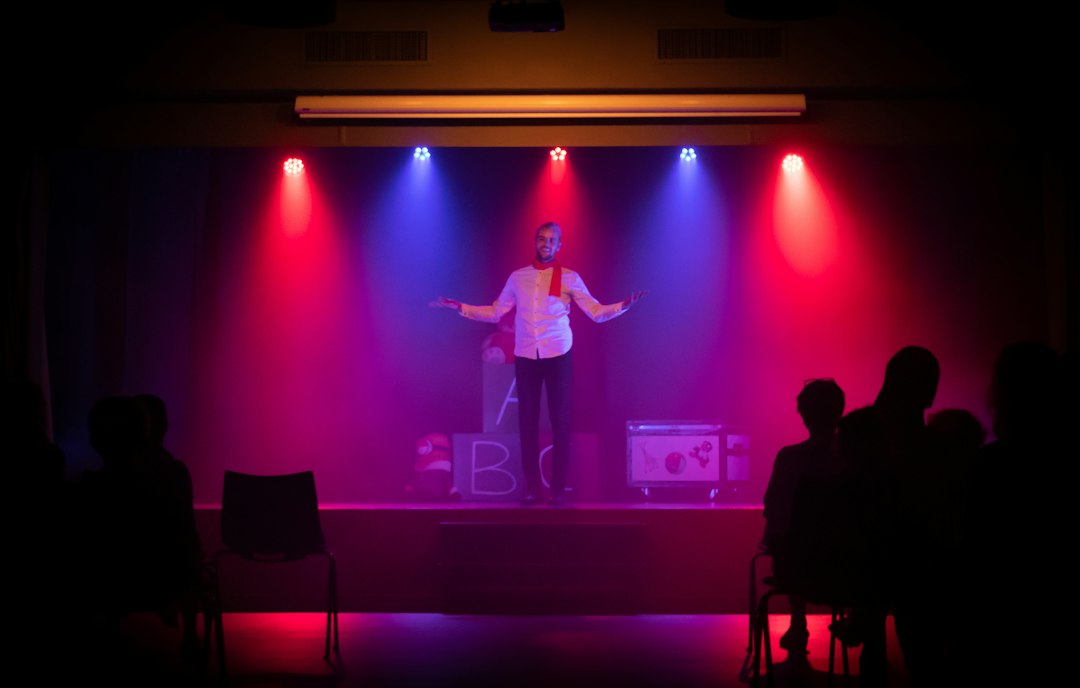
Here’s the part nobody tells you: the fear doesn’t go away because you got better at acting. It goes away because you got used to feeling it in front of people and surviving.
This is why solo practice in your bedroom only gets you so far. A small group, eight to twelve people, does something a mirror can’t. It normalizes the nervousness. You watch someone else’s hands shake during their first scene, and something in your chest loosens, because you realize the terror isn’t unique to you. It’s the room. Repeated exposure in a low-stakes setting rewires the shame response faster than any amount of private rehearsal. Find a workshop with a small cohort size before you worry about finding the "right" teacher.
Work with a single scene, not ten of them
Beginners often think more material equals more progress. It’s the opposite. Pick one scene, two to three minutes long, and live inside it for two to four weeks.
Memorize it. Run it badly. Run it again. Adjust one small thing: maybe you were rushing the second line, maybe you weren’t listening to your scene partner’s last word before you spoke. Fixing that one habit teaches you more about acting than skimming the surface of ten different scenes ever will. Depth beats coverage, especially early. You’re not trying to build a resume of material. You’re trying to build instinct, and instinct needs repetition on the same ground to take root.
Understand what your character wants in each moment

Before you worry about where to stand or how to cry on cue, answer one question: what does your character want right now, in this line, in this breath? Are they trying to get something from the other person? Avoid something? Delay an answer?
That objective is the engine. Without it, you’re just reciting words in the right order, and audiences can feel the difference immediately, even if they can’t name it. With it, every choice you make, where you look, how fast you speak, whether you step closer or back away, starts to make sense because it’s in service of something. This single shift, from reciting to wanting, is the one that separates people who are "doing lines" from people who are acting.
Commit to the ensemble and watch yourself back without flinching
Acting skill compounds. It doesn’t arrive in a single breakthrough class; it builds through consistent reps with the same people. A four-week workshop that meets every Tuesday night for two hours, six to ten people total, running somewhere between $180 and $320 depending on the city, builds trust with your scene partners faster than sporadic drop-ins ever could. Those actors become your safety net. They’re the ones who’ll catch you when a scene falls apart mid-run, and you’ll do the same for them. That trust is hard to fake and impossible to skip.
The other piece of commitment is less social and more private: record your scene work and watch it back. This feels awkward the first time. Do it anyway. You’ll see things you couldn’t feel from inside your own body: tension sitting in your shoulders, a pace that rushes through your best line, eyes that drift to the floor when you lose confidence. Data beats intuition here. You already have guesses about what you’re doing wrong. The recording tells you the truth.
Putting this all together means finding a consistent setting where you can show up weekly, work a single scene over real time, and build trust with the same small group of people. That’s less about talent and more about structure, which is exactly the kind of thing a workshop with a clear schedule and a committed cohort can give you. If you’re looking for one near you, searching by session format and group size will tell you more than searching by teacher reputation alone.
Find workshops near you at wayfield.app/workshops
Recommended Resources
digital voice recorders
The article explicitly instructs beginners to record themselves reading aloud to establish their baseline voice.
mirrors
The article mentions using a mirror for solo practice and self-observation during rehearsal.
As an Amazon Associate, Wayfield earns from qualifying purchases. Clicking and buying through these links supports this content at no extra cost to you.






Leave a Reply