
Photo by Iswanto Arif on Unsplash
A workshop organizer books Iceland’s Diamond Beach because every photography tour goes there. Ten participants stand in a line, cameras pointed at the same ice chunks, and the organizer walks the group through generic tips about "foreground interest." Nobody leaves with a repeatable skill. They leave with a photo that looks like everyone else’s photo from that beach.
The organizers who build repeat business with photography travel workshops don’t scout locations for scenery. They scout for teaching moments. A cliff that only offers one vantage point teaches nothing. A canyon with three distinct compositional problems, solvable only from specific spots at specific times, teaches everything. The difference shows up in your reviews, your rebooking rate, and eventually your margin.
Location scouting as your competitive edge
Scout 6 to 12 months out, not the week before. Photograph each site at sunrise, midday, and blue hour across at least two seasons if the workshop repeats annually. A slot canyon in Utah reads completely differently in July light versus October light, and your curriculum needs to account for both if you’re running the same workshop twice a year.
Document the operational details while you’re there: exact sunrise time by month, the 20-minute hike-in versus the 90-minute one, permit lead times, whether a local guide is legally required for access. A friend running workshops in Antelope Canyon learned the hard way that permits book out 4 months ahead during peak season. That scouting trip becomes your curriculum backbone, not just a location list. Without it, you’re improvising instruction on-site, and improvised instruction is what generic tours already sell.
Build your composition teaching around specific sites
Pick 4 to 5 landscapes, and assign each one a single compositional job. A river bend with a visible trail teaches leading lines. A layered mesa at golden hour teaches depth through atmospheric haze. An old stone archway teaches frame-within-frame composition using the arch itself as the border.
This is the part most organizers skip. They pick beautiful locations and hope composition lessons happen naturally. They don’t. A participant standing in front of a technically perfect leading-line shot still needs someone to name what makes it work, in real time, with their camera in hand. When each site isolates one principle, participants build a mental catalog: this terrain type, this light, this composition rule. That catalog is what they take home and apply to landscapes you never showed them.
Structure daily sessions to reinforce through repetition
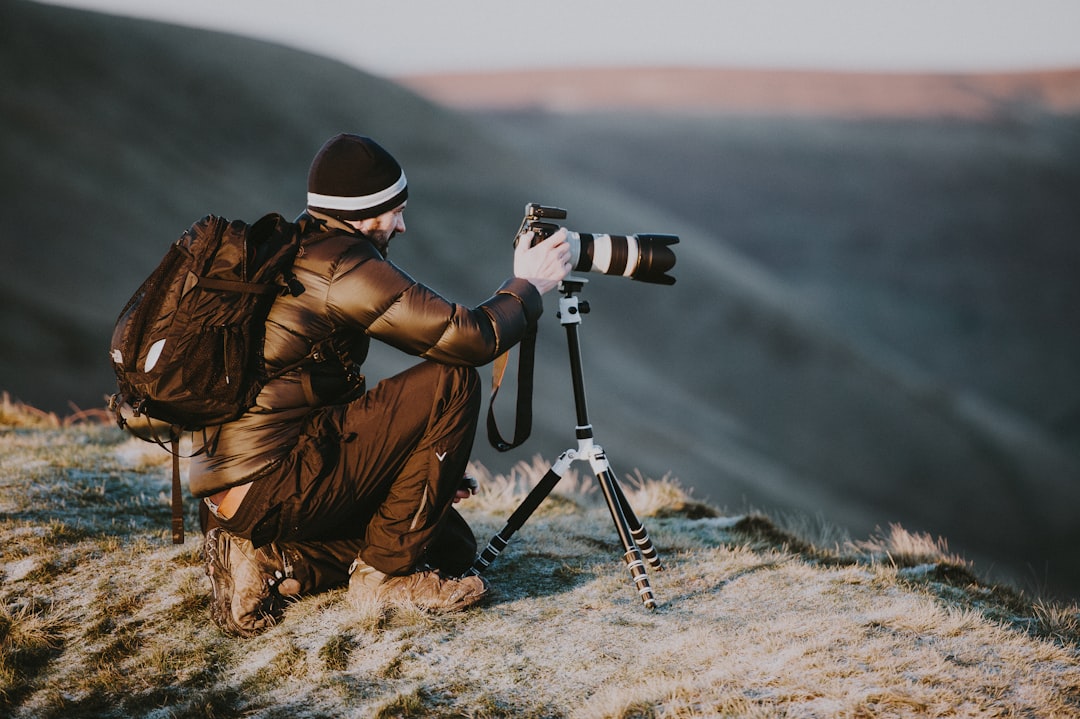
Site-hopping feels productive. It isn’t. Return to the same location on day one at sunrise and day three at sunset, and you teach two different lessons from one place: morning light for color and contrast, evening light for silhouette and backlighting against the same skyline.
Repetition builds instinct faster than variety. A participant who photographs the same canyon wall in three different light conditions starts predicting how light will behave before you explain it. That’s the actual goal of a composition-focused photography travel workshop, not a folder of 200 similar sunset photos.
Set participant capacity based on location logistics
Iconic landscapes attract crowds, and crowds ruin sightlines. Cap groups at 8 to 12 participants. Beyond that number, you either need a second leader or you accept that half the group is standing behind the other half, unable to see the composition you’re describing.
Some sites tighten that number further. A narrow overlook that fits six tripods safely caps your group at six for that session, full stop, regardless of what your total workshop roster says. Wayfield’s session capacity settings handle this well: you set a hard cap per session, not just per workshop, so a 12-person workshop can still run an 8-person session at a tight vantage point without anyone getting bumped at the trailhead.
Price for guide costs and permit overhead
Local guides, park permits, and protected-site access run $400 to $800 per workshop day, depending on region and season. Build that into your per-participant fee before you build in margin, not after.
Run the math on a 10-person, 3-day workshop: $600 average daily overhead for guides and permits comes to $1,800 total, or $180 per participant just to break even on logistics. Price the workshop at $495 per person and you’re clearing roughly $315 per participant after fixed costs, before accounting for your own time and marketing. Underprice to compete with generic tours and you’ll cover permits but pay yourself nothing.
Collect participant work before the workshop
Request 3 to 5 recent photos with captions during registration. Review them two to three weeks out. A participant sending in flat, centered compositions needs different on-site coaching than one already experimenting with negative space.
This step gets skipped constantly because it feels like extra admin. It’s the cheapest way to personalize instruction you have. Knowing in advance that four of your ten participants shoot mostly with wide-angle lenses means you can plan the frame-within-frame session around lens choices you already know are in the group’s bags, rather than discovering it on-site and losing teaching time to gear troubleshooting.
Create a post-workshop critique system
Collect images from the workshop itself, then host a live online critique session 2 to 3 weeks later. Analyze the compositions in context: "here’s what you shot at the mesa on day two, here’s why the leading line works, here’s what would have made it stronger."
This session does more for referrals than the workshop itself. Participants remember the moment someone explained why their photo worked, not just that they got to stand somewhere scenic. Build this into every photography travel workshop you run, and the rebooking rate tells you it was worth the extra two hours.





Leave a Reply