
Photo by Frederick Shaw on Unsplash
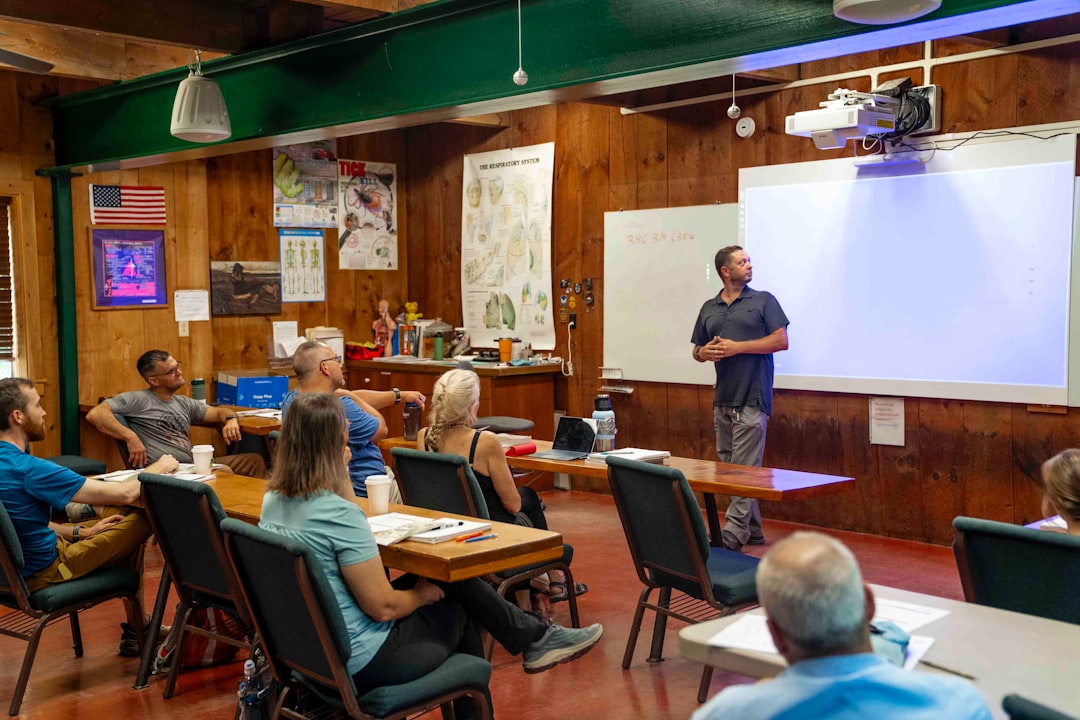
You just wrapped a $2,000 photography workshop with 20 participants. The sessions went well, the feedback was strong, and by Monday morning you’re back to zero. No pending revenue, no confirmed roster, just a blank calendar and the same recruiting work you did six weeks ago. This is the feast-famine cycle that defines most workshop businesses, and it’s the reason membership recurring revenue changes the math for organizers who run workshops as a real income stream, not a hobby.
Why one-time workshops leave income on the table
Every workshop starts from scratch. You market to strangers, convert a fraction of them, deliver the session, and then the relationship ends unless you rebuild it from nothing next quarter. A $2,000 workshop with 20 participants means 20 new relationships built and abandoned in the same breath. The work of finding those 20 people rarely gets easier the second time, because you’re often starting the search over rather than deepening it.
Recurring revenue flips that math. Instead of relaunching from zero each cycle, you retain a core group who pays monthly and shows up because the relationship already exists. The acquisition cost you paid once (the ad spend, the referral asks, the discovery calls) gets amortized across twelve months of revenue instead of one weekend.
The membership conversion mechanism
Don’t build a membership program for the public. Build it for the participants who already know your work. After each workshop, identify the people who asked follow-up questions, showed up early, or stayed late. These are your conversion targets, not strangers browsing a signup page.
Offer them something specific: monthly sessions, early booking on future workshops, or curated content unavailable to non-members, all at a fixed monthly rate. The invitation goes out directly, by email or a personal message, never as a public announcement. Direct invitation converts at a far higher rate than open enrollment, because you’re asking people who already said yes once.
Pricing structure that protects margin
Charge $49 to $79 per month for access to one session monthly plus community features like a private group or resource library. At 15 members and $79 per month, that’s $1,185 in monthly revenue with zero additional marketing spend once the group stabilizes. At the lower end, 15 members at $49 still nets $735 monthly, recurring, without the recruiting cost of a new workshop each time.
Compare that to a single $2,000 workshop that took weeks to fill. The membership model produces less per transaction but far more per hour invested, because the sales cycle happens once, not every quarter.
Building the member roster systematically
Segment participants into three tiers immediately after each workshop. High engagement participants get a membership invitation within 48 hours, while the momentum from the workshop is still active. Moderate engagement participants get invited 30 days out, after they’ve had time to miss the format. Low engagement participants get contacted at 60 days, often with a lighter offer or a survey first.
This staggering matters. Inviting everyone on day one reads as a hard sell and depresses conversion. Spacing the outreach lets each tier convert on its own timeline, and it keeps your calendar from filling with rejection all at once.
Using Wayfield rosters to track lifecycle
Tracking this manually across spreadsheets gets messy fast, especially once you’re running multiple workshops per quarter. Wayfield’s participant rosters show attendance and session data per person, so you can see who showed up, who engaged, and who’s ready for a membership invitation without cross-referencing three different files.
Roster notes let you log conversion status directly on each participant record: invited, declined, converted, follow-up scheduled. That single source of truth replaces the external spreadsheet most organizers cobble together and then abandon after the second workshop.
Retention mechanics that actually work
Members don’t stay because they forget to cancel. They stay because the content is worth the fee. Deliver one exceptional session per month, not four mediocre ones. Announce next month’s topic seven days before the billing cycle renews, so members know what they’re paying for before the charge hits.
Skip the retention gimmicks: no countdown timers, no fake scarcity, no guilt emails about missed sessions. A member who knows exactly what’s coming and finds it valuable renews without being asked. A member who has to guess starts questioning the charge.
Your first membership cohort target
Aim for 10 to 12 founding members pulled directly from your past workshop rosters. At $49 to $79 per month, that’s $500 to $950 in monthly recurring revenue before you’ve run a single new marketing campaign. At that scale, you can afford to run two sessions a month instead of one and still come out ahead of what a comparable one-time workshop would net after acquisition costs.
The founding cohort also becomes your proof of concept. A working membership recurring revenue model with 10 members is easier to expand to 30 than a cold-launched program with none.
Start free on Wayfield, no credit card required.







Leave a Reply