

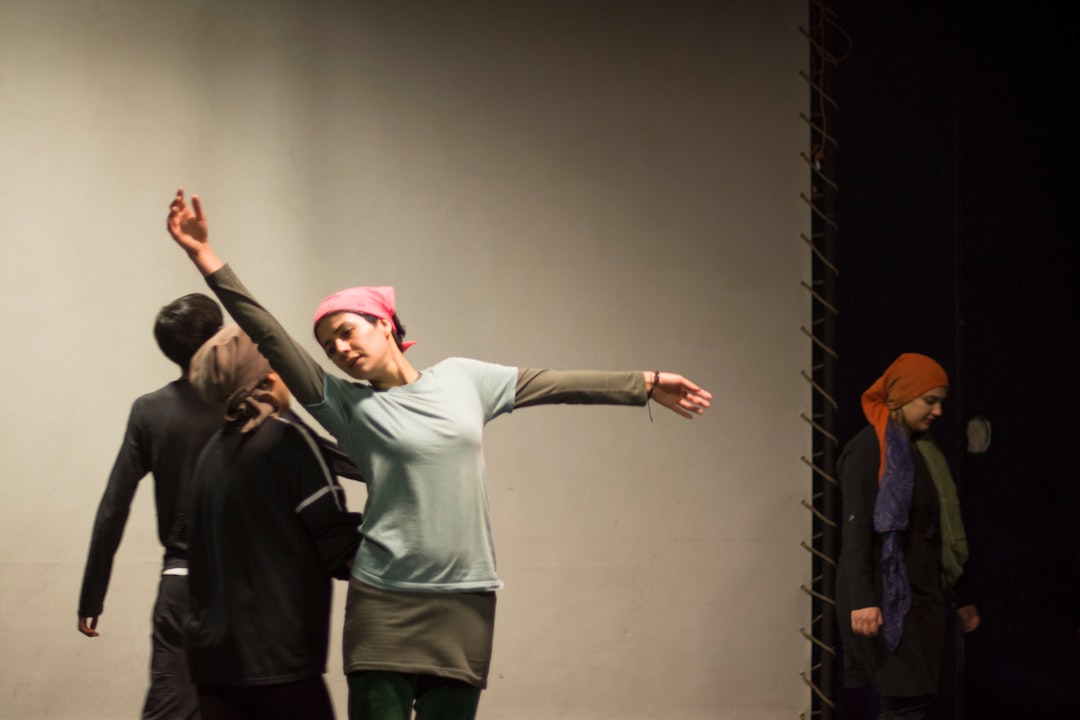
Photo by Sergi Dolcet Escrig on Unsplash
Twelve people sign up for your intro improv workshop. Nine of them never come back. That’s not a talent problem or a marketing problem. It’s a design problem, and it starts before anyone sets foot in the room.
Most organizers build their intro improv workshop around games. Pick five crowd-pleasers, run them in sequence, hope the energy carries people into the next session. It doesn’t work, because comfort isn’t a byproduct of fun exercises. It’s a structural outcome you have to engineer on purpose, from registration through the follow-up email.
Set the comfort threshold before day one
Screen for experience during registration. Ask one question: "Have you performed improv before, even once?" Separate the yeses from the nos into different tracks.
A mixed room tanks both groups. The person with six months of stage time gets bored waiting for a beginner to understand "scene work." The complete beginner watches that same person land a callback joke and decides improv isn’t for them. Run two intro tracks if your numbers support it, even if that means two smaller cohorts of eight instead of one group of sixteen. Smaller and homogeneous beats large and mixed every time.
Structure the first 20 minutes to kill self-consciousness
Don’t open with a circle and introductions. Open with movement.
A 10-minute physical warm-up, mirroring exercises, status walks, space-work where people move without talking, does something a verbal icebreaker can’t. It exhausts the self-monitoring part of the brain before anyone has to speak or make a choice in front of the group. Participants who move first report noticeably lower self-consciousness by minute 20 than those who start seated and talking.
This matters more in an intro improv workshop than any other session type, because the entire audience showed up assuming they’ll embarrass themselves. Movement burns off that anxiety before the stakes go up.
Teach one game, one skill, one principle

A four-hour intro session has room for exactly one game, one skill, and one principle. Not five games and three philosophies. One.
Teach "Yes, And" as the game. Teach active listening as the skill underneath it. Teach commitment to choices as the principle that ties it together. Every exercise for the rest of the session reinforces those three things from different angles. Participants leave able to explain what they learned in one sentence. Overload them with five different games and three competing philosophies of improv, and they leave with decision fatigue instead of a skill they can name.
Use small groups, not full-room performance
A beginner who performs a scene in front of 30 strangers on day one will not sign up for week two. The exposure is too high, too fast.
Run pair work and trios instead. Two people play a scene while one person watches and gives one specific note. Three people watching two others rotates fast enough that everyone plays and everyone watches, but nobody stands alone in front of a crowd until they’ve had four or five reps in a low-stakes setting. Confidence builds through repetition with a small, safe audience, not through a single high-exposure performance moment.
Collect commitment on the last 15 minutes
Don’t wait until the following week to pitch the next level. Energy peaks right after the closing scene work, while participants are still riding the high of a scene that landed. That’s your window.
Frame the next session as a continuation of what they just did, not a separate purchase decision. "You just built your first scene using Yes, And. Week two is where you start layering character and relationship on top of that" reads as a natural next step, not a sales pitch. Wayfield’s session enrollment lets you put a join code on the screen right there in the room, so attendees commit while the energy is still high instead of "thinking about it" and never following through. That five-minute window in the room converts at a rate no follow-up email will match.
Follow up within 24 hours with specific reflection
Generic praise doesn’t convert. "Great work today!" gets deleted. Specific observation gets read twice.
Send a message within 24 hours that names something you actually saw. "You shifted your status mid-scene during the trio exercise, and the room reacted immediately" tells a participant you were watching them specifically, not running through a script. That level of attention is rare in a first workshop experience, and it’s exactly what makes someone believe they have real potential worth developing. Write these notes during the session itself, even a two-word scrawl on a clipboard, because you won’t remember by the next morning.
Price low enough to remove second-guessing
A $35 intro improv workshop removes the hesitation that kills conversion. At $85, a stranger has to decide whether improv is worth real money before they’ve ever tried it. At $35, the decision is easy, and the actual experience does the selling.
Once someone has felt the specific relief of landing a scene, the anxiety of week one replaced by the small thrill of a joke that worked, they’ll pay $85 for an eight-week series without hesitation. You’re not selling improv at that point. You’re selling more of a feeling they already had. Price the intro to remove friction, and let the room close the sale.
The organizers running the same intro improv workshop for the third year in a row without conversion growth usually have a games problem they think is a marketing problem. Fix the structure first: screened cohorts, movement before talk, one skill taught deeply, small-group exposure, in-room commitment, specific follow-up, and a price that removes hesitation. The games were never the issue.
Start free on Wayfield, no credit card required.






Leave a Reply