Photo by Khara Woods on Unsplash
A marketing director emails asking for a painting workshop for her team of 24. She wants it fun, memorable, and done in two hours. You quote $50 per head because that’s what worked for your last group of eight, then reality hits: four times the easels, a second facilitator, a room layout you’ve never tested. The math for a small group doesn’t scale, and now you’re improvising logistics instead of running a workshop.
This is where most painting instructors lose money on corporate bookings. They treat team building painting workshops like private events with more chairs. Group size isn’t a multiplier on your existing model. It’s a different operational problem entirely.
Why corporate painting workshops fail at group size
Pricing by headcount alone ignores the real variable: capacity ceiling. A workshop built for 12 people with one instructor giving individual feedback breaks down completely at 40. You can’t walk the room fast enough, you can’t manage paint stations without bottlenecks, and corporate clients notice when their team stands around waiting for supplies.
Organizers who succeed with team building painting workshops design for structure first, price second. Capacity determines whether you need one leader or three, preset stations or open tables, a 20-minute cleanup or a two-hour one. Get the structure wrong and you’re managing chaos with a paintbrush in your hand.
Segment by team size, not just price tier
Stop thinking in price tiers. Think in operational tiers.
Small teams (6-12 people) support guided instruction. One leader gives individual feedback, adjusts pacing, and creates the personal attention that makes a session feel premium. Charge accordingly.
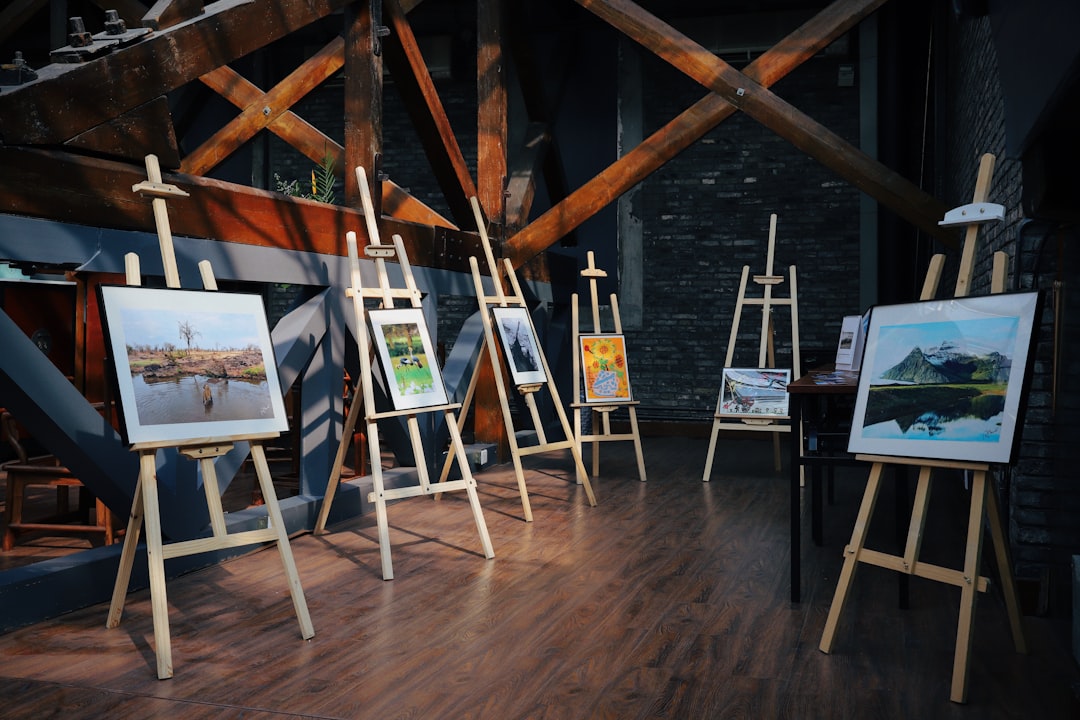
Medium groups (13-30 people) need facilitator stations and preset designs. You’re running a system, not teaching technique. Pick 2-3 canvas templates, assign color palettes in advance, and position a facilitator every 8-10 participants so questions get answered without stalling the room.
Large groups (30+) require pre-painting setup: canvases primed, palettes pre-mixed, projects simplified so a first-time painter finishes in 90 minutes without instructor intervention. You’re selling an experience, not an art lesson, and your pricing floor should reflect the added labor of prep, not just the headcount.
Each tier carries a different cost structure. Confuse them and you’ll underprice the labor-heavy tiers or overprice the simple ones.
Calculate your true session cost
Run the numbers before you quote anyone.
Take a workshop priced at $45 per person for a group of 12. Materials run $18 per person, $216 total. Venue rental is $150. Add your time: two hours of setup, two hours teaching, one hour cleanup, five hours total. At $40 an hour, that’s $200 in labor.
Total cost: $216 materials + $150 venue + $200 labor = $566. Revenue at $45 per person for 12 people is $540. You’ve lost $26 before insurance, transportation, or profit.
The per-person price looked reasonable. The math wasn’t. Calculate material cost per person, venue cost amortized per session, and full leader time, including everything outside the two hours participants see, before you set a number.
Price based on outcome, not just activity
Corporate clients aren’t buying paint and canvas. They’re buying a team moment, and they’ll pay for it if you price like you understand that.
A two-hour workshop for 20 people at $60 per person totals $1,200. That price signals a facilitated, purposeful experience. Drop to $30 per person and you signal the opposite: an amateur activity squeezed into a conference room between meetings.
Anchor pricing to what the client actually cares about: improved team communication, a shared creative memory, a physical piece each person takes home. A finance team offsite paying $1,500 for a session isn’t evaluating your paint costs. They’re evaluating whether their team walked out talking to each other differently than they walked in.
Build deposit and cancellation structure into pricing
Corporate bookings come with corporate problems: last-minute cancellations, headcount changes two days out, a project that suddenly "needs everyone in the building." None of that should come out of your margin.
Require a 40-50% nonrefundable deposit at booking. This locks your materials order, your venue hold, and your leader’s calendar. Offer flexibility on date changes, since corporate schedules shift, but enforce a firm cancellation deadline, typically 7-10 days out, after which the full balance is owed regardless of attendance.
A workshop management platform like Wayfield handles this automatically: commitment dates, deposit collection, and roster tracking happen before you show up with paint. That removes the awkward follow-up email and gives you a clean record of who’s confirmed.
Set minimum group sizes to protect your time
A workshop for 8 people takes nearly the same setup time as one for 16. The canvases, the paint stations, the instructional walkthrough don’t shrink proportionally with headcount.
Set a floor: 10-12 for small-group formats, 15+ for medium tiers. If a booking falls short, don’t run it at the quoted price. Offer a per-person adjustment (charge the group the same total you’d have gotten at minimum) or push the date. Running a $540 workshop for 6 people instead of 12 means the same work for half the revenue.
Create tiered add-ons for recurring revenue
The base fee covers instruction and materials. Everything else is margin.
Offer a pre-event planning call for $150-250, where you align on team goals and customize the project. Sell takeaway prints of the finished pieces at $8-15 per person, a near-pure-margin add since printing costs are minimal. Package a short follow-up video of the session for $300-500, useful for internal comms teams who want content for the company newsletter.
None of these add-ons extend your session time. They extend your revenue per booking, the difference between running occasional workshops and running a business that grows without adding more hours to your week.
Start your first workshop free at wayfield.app/getting-started, no credit card required.
Recommended Resources
acrylic paints
Pre-mixed acrylic palettes are standard for team workshops and directly relate to per-person material costs mentioned in pricing calculation.
easels
The article explicitly mentions easel scaling as a cost factor; wood tripod easels are the standard for group workshops.
canvas
Pre-primed canvas panels are ideal for large corporate groups and reduce setup time significantly.
paint brushes
Brush sets allow for efficient station setup where multiple participants can access tools simultaneously.
As an Amazon Associate, Wayfield earns from qualifying purchases. Clicking and buying through these links supports this content at no extra cost to you.




Leave a Reply