
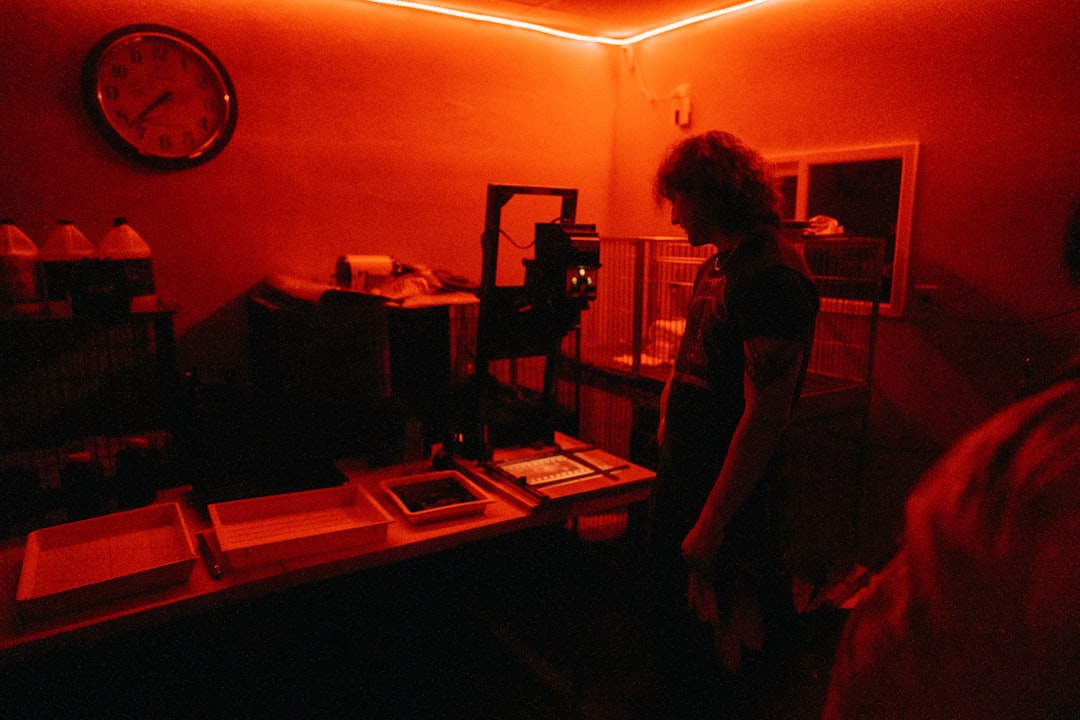
Photo by Francisco Gonzalez on Unsplash
Six enlargers, one safelight, and a queue of participants waiting to see their first print emerge in the developer tray. That’s the ceiling of a beginner darkroom workshop, and it’s also the reason most instructors mis-price and under-book them. Darkroom teaching doesn’t scale the way digital photography classes do, and treating it like a scaled-down version of a bigger format is the first mistake new studio educators make.
Why beginner darkroom workshops need a different structure than digital classes
A digital photography workshop can run 30 people through a lecture and a shooting session with minimal friction. Darkroom work can’t. You’ve got one enlarger per station, fixed tray space, and a safelight zone that only holds so many bodies before someone fogs a print by walking through the wrong beam. Six to eight participants per session is the practical ceiling before instruction fragments and you’re triaging instead of teaching.
That capacity ceiling isn’t a limitation to work around. It’s the design constraint that should drive your pricing, your cohort size, and your marketing radius. Organizers who ignore it end up either overselling sessions and burning out their equipment, or underselling them and eating the fixed cost of chemistry and paper alone.
Pricing structure: capacity-constrained workshops with deposit mechanics
Small cohorts mean your per-person cost is higher than a digital class, and your price needs to reflect that. Charge $180 to $250 per participant for a 3-hour session. That covers paper, chemistry, your time, and the wear on equipment that darkroom work chews through faster than people expect.
Require a 50% deposit at registration. No-show rates in darkroom workshops run 15% to 20% when there’s nothing on the line, higher than almost any other workshop format because the barrier to entry (buying film, showing up on time, committing an afternoon) feels abstract until money changes hands. A deposit converts a maybe into a commitment and covers your cancellation friction if someone drops two days out.
Cohort timing and commitment dates that protect your income
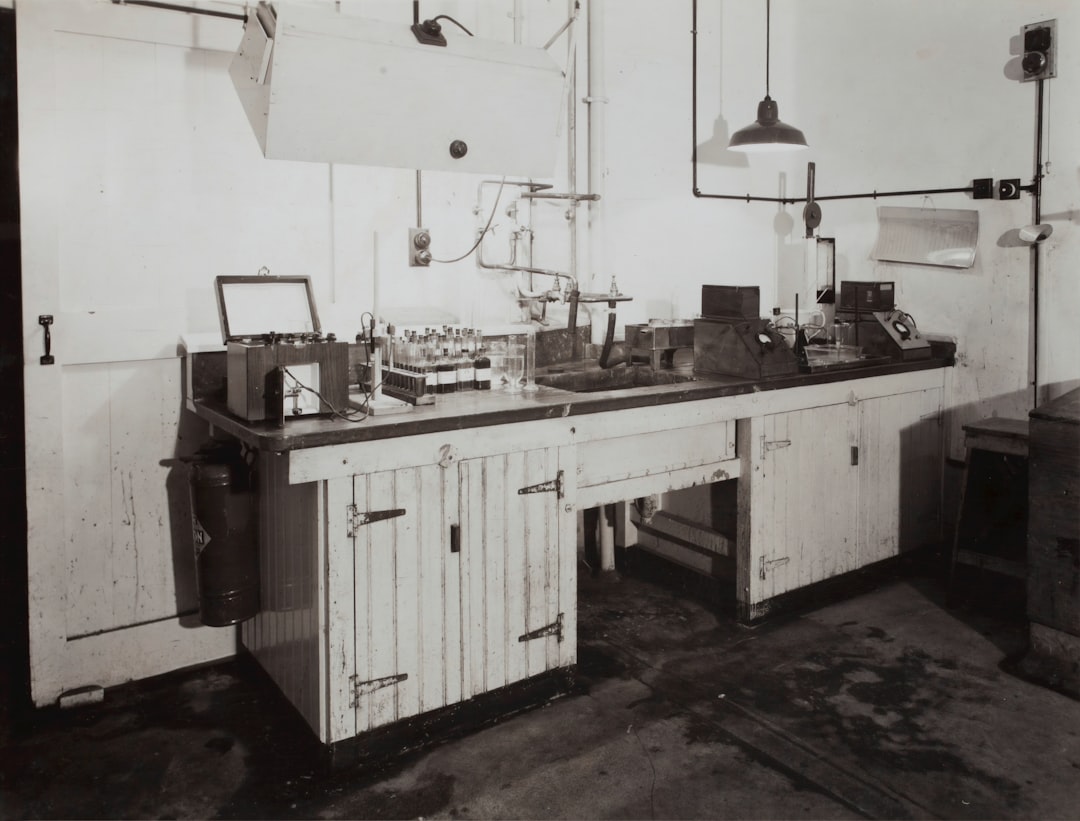
Set your commitment deadline 10 to 14 days before the session date, not the day before. That window gives you time to confirm headcount, mix chemistry in the correct ratios (dev, stop, fix don’t keep well once diluted), and cancel a session that’s underbooked before you’ve sunk cost into it.
Run the math before you commit to a date. Three confirmed participants might get you to break-even. Five guarantees margin. Below three, cancel and rebook rather than running a session at a loss to save face. A tool like Wayfield’s commitment-date feature makes this decision mechanical instead of emotional: you set the threshold, the roster tells you where you stand, and you cancel or confirm on schedule instead of guessing.
Marketing to local participants: where beginners actually search
Darkroom workshops recruit locally. Nobody flies in for a beginner darkroom workshop the way they might for a five-day landscape retreat in Iceland. Your participants are searching "darkroom near me" on their phone, checking a local photography club’s event board, or seeing a post from someone in their own city.
Put your energy into local art centers, camera club newsletters, and Instagram geotags for your city or neighborhood. Direct email to past participants generates roughly 40% of repeat signups in workshops we’ve tracked, which means your existing list is worth more than a new ad campaign. Paid ads only work once you already have regional visibility; spending on Facebook ads before anyone locally knows your name is money down a drain you can’t develop film in.
Session logistics that prevent chaos in tight spaces
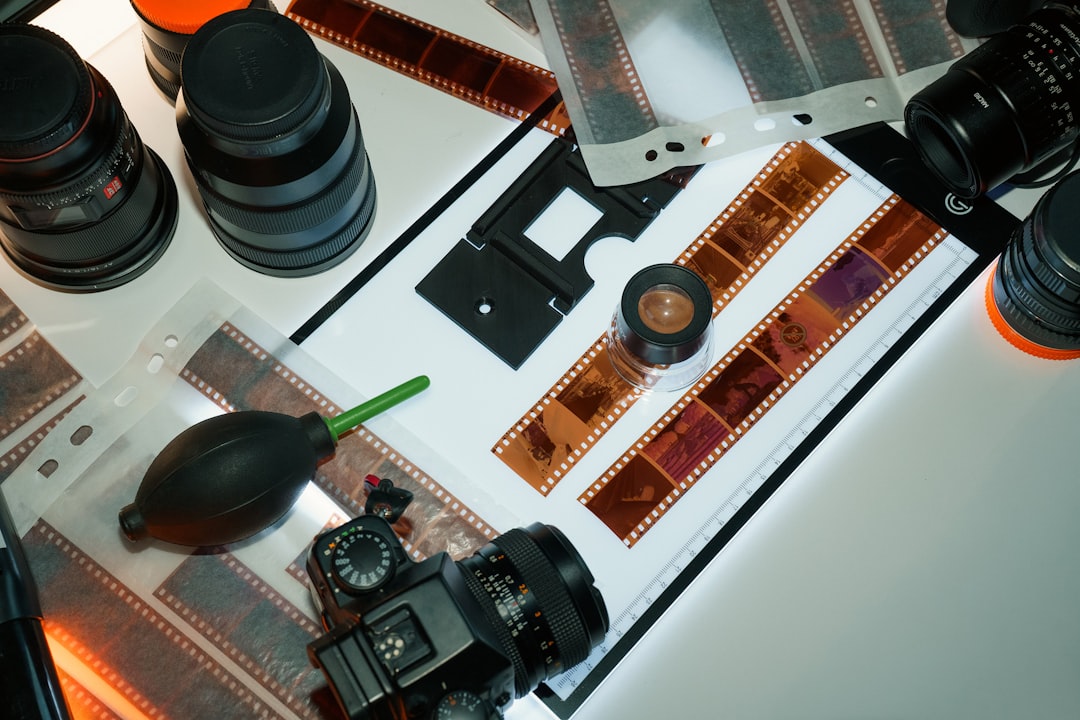
Map your physical space before you market a single seat. Chemical storage, enlarger placement, print drying racks, and where eight people stand without elbowing the safelight curtain: all of it needs to be solved on paper first. A home-based studio has different load math than a rented dark space with proper ventilation. If you’re running this out of a converted bathroom or basement, your real capacity might be five, not eight, no matter what the equipment count suggests.
Track which prints need to dry overnight, who’s responsible for chemical disposal, and who’s on cleanup duty before the first session starts, not during it. A roster tool that logs this per session (Wayfield works fine for this) keeps you from relearning the same lesson every cohort when a participant leaves wet prints on someone else’s drying rack.
Building recurring cohorts instead of one-off workshops
Beginner darkroom skills don’t land in one afternoon. Exposure, development, contact sheets, dodging and burning: that’s a 4-to-6-session arc, not a single class. Structure your offering as a rolling 4-week series with fixed start dates rather than a string of disconnected one-off classes.
Series format fills faster because participants can see the whole arc before they commit, and it generates predictable quarterly income instead of a scramble to rebook every few weeks. One-off classes leave people with half a skill and no clear next step, which kills the word-of-mouth referral that darkroom communities run on.
Positioning as the studio educator, not the marketplace teacher
Darkroom communities are small and tightly networked. A workshop marketplace listing puts you next to twenty other instructors competing on price. Your own website and email list put you in front of people who already trust your work.
One strong review from a local photography club leader brings you five referrals faster than any paid listing will. Own your registration flow, own your participant list, and build the reputation directly instead of renting it from a platform.
Running a beginner darkroom workshop profitably comes down to respecting the constraints: small cohorts, real deposits, tight commitment windows, and a local audience that talks to itself. Get the structure right once, and the marketing gets a lot easier.
Start free on Wayfield, no credit card required.
Partner Spotlight · K&K Insurance
Most photography workshops fail to fill not because the instruction is weak, but because organizers underestimate their actual costs. Rent the darkroom space, cover your materials, account for the leader's time, and suddenly a $45-per-person workshop doesn't math. That's before you factor in the liability piece: one participant's chemical burn or damaged equipment turns a profitable first workshop into a financial hole. K&K Insurance covers that gap—event liability policies built specifically for hands-on creative work, so you can price for margin instead of fear. Check their workshop coverage options and get quoted; a small premium per session protects the income you're counting on. Learn more →
Recommended Resources
Photography
Core consumable for beginner darkroom workshops; article mentions paper cost explicitly
Essential equipment referenced in article; major investment for workshop setup
Explicitly mentioned as cost driver and planning factor for workshop instructors
Core infrastructure referenced; capacity constraint around number of enlargers
Physical constraint mentioned as limiting factor in workshop capacity planning
As an Amazon Associate, Wayfield earns from qualifying purchases. Links above are affiliate links — clicking them and buying supports this content at no extra cost to you.







Leave a Reply